

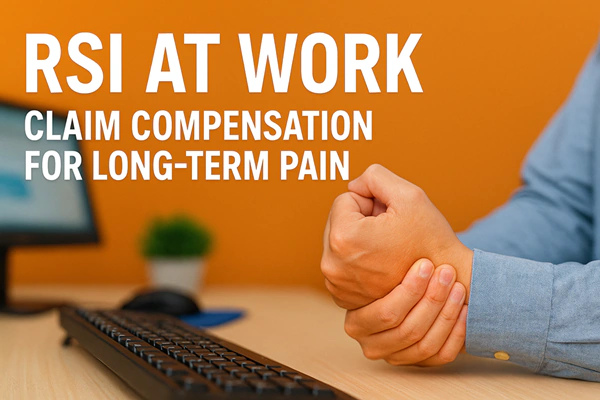
Repetitive strain injury, often known as RSI, is one of the most common work-related health problems in the UK. Many employees in Nottingham and across the country experience pain, numbness or stiffness caused by repetitive tasks, awkward postures, or poor working conditions. While these injuries may start as mild discomfort, they can quickly develop into chronic pain that limits mobility and affects the ability to work.
If your job has caused or worsened an RSI, you may be entitled to claim compensation. Understanding your rights, how to prove negligence and what to expect in a claim can make a huge difference to your recovery and financial stability.
What is repetitive strain injury (RSI)?
RSI is a general term for pain or damage to muscles, tendons, or nerves caused by repetitive movements or overuse. It often affects the hands, wrists, forearms, elbows, shoulders and neck.
Typical examples include:
- Typing or data entry for long periods without breaks
- Using a mouse or touchscreen continuously
- Repetitive manual handling tasks
- Working with vibrating tools or machinery
- Poorly designed workstations or awkward sitting positions
RSI can range from mild soreness to severe pain that makes everyday activities difficult. Conditions such as carpal tunnel syndrome, tendonitis and tennis elbow all fall under the RSI category.
How do you know if you have RSI?
The symptoms often develop gradually. Many people ignore them at first, thinking they will pass. However, it is important to recognise early signs before permanent damage occurs.
Common symptoms include:
- Tingling, numbness or burning sensations
- Stiffness or weakness in the hands or arms
- Pain that worsens during or after repetitive activity
- Loss of grip strength or coordination
- Swelling or tenderness in the affected area
If these symptoms persist, it is essential to seek medical advice. A doctor can confirm the diagnosis and rule out other conditions such as arthritis or nerve compression.
When your employer may be responsible
Employers in Nottingham have a legal duty to protect staff from preventable injuries under the Health and Safety at Work Act 1974. This includes steps to minimise repetitive strain and ensure that employees have a safe working environment.
You may have a valid claim if your employer failed to:
- Carry out regular risk assessments
- Provide appropriate equipment or ergonomic workstations
- Offer adequate breaks during repetitive tasks
- Rotate duties to reduce strain
- Provide training on correct posture or lifting techniques
Even in office jobs, employers are expected to adjust chair, keyboards and screen heights to prevent RSI. Failing to do so can amount to negligence if it results in injury.
How an RSI can affect your life
While RSI may sound like a minor issue, the impact can be significant. For some, it leads to constant pain, loss of income, and even permanent disability. Common effects include:
- Difficulty performing your normal job duties
- Needing time off work or changing career altogether
- Ongoing physiotherapy or medical treatment
- Reduced quality of life due to pain and frustration
The emotional toll can be just as serious. Chronic pain often leads to stress, anxiety and sleep problems, making it harder to recover and return to work.
Making a claim for RSI
If you believe your RSI was caused or worsened by your work, you can make a personal injury claim. Compensation can help you recover lost earnings, cover medical costs and acknowledge the suffering you’ve endured.
Here is how the process usually works:
- Seek medical diagnosis. Obtain a clear record of your injury and its likely cause.
- Report the problem to your employer. Make sure the incident or diagnosis is logged in your company’s accident book.
- Gather evidence. This may include photographs of your workstation, copies of risk assessments, or witness statements from colleagues.
- Speak to a solicitor. A specialist personal injury solicitor will assess your case, gather expert evidence and handle communications with insurers.
Most claims are handled on a no win, no fee basis, which means you will not pay anything unless your case succeeds.
What compensation can cover
The amount you can claim depends on the severity of your injury, the length of your recovery and how much income you have lost. Compensation typically covers two main areas:
- General damages: For pain, suffering and loss of quality of life.
- Special damages: For financial losses such as medical bills, physiotherapy, medication, travel expenses and loss of earnings.
If your RSI has long-term effects, your solicitor will also consider future losses, such as reduced earning potential or the cost of retraining for a new career.
Can you claim if symptoms developed over time?
Yes. Many RSI cases develop gradually, which means you might not notice the injury until months or even years after it began. You can still claim compensation, as long as you start within three years of the date you first realised your symptoms were work-related.
Your solicitor can help establish when the injury began and gather medical evidence to support your case.
What if you share some responsibility?
Even if you think you were partly to blame for your injury, for example, by not taking regular breaks, you may still have a claim. The law allows for contributory negligence, meaning compensation can be reduced by the percentage of responsibility you hold.
Your solicitor’s role is to show that your employer failed to take reasonable steps to protect you, even if you made small mistakes yourself.
How to prevent RSI in the workplace
Preventing RSI is always better than dealing with its consequences. Employers should take proactive steps to reduce risk, and employees can protect themselves by:
- Taking short breaks every hour
- Adjusting chair height and posture regularly
- Using ergonomic keyboards and mouse devices
- Stretching hands, wrists and shoulders during the day
- Reporting early symptoms to managers or occupational health teams
By working together, both employers and staff can reduce the risk of long-term damage.
Why choose a Nottingham solicitor?
Choosing a local firm like Marley Solicitors means your case will be handled by people who understand the local workforce and employment practices. Our Nottingham-based team has years of experience helping people who developed RSI from both office and industrial work.
We will guide you through every step of the process, from medical evidence to final settlement, with clarity and compassion. You will always deal directly with a solicitor who keeps you informed and focused on recovery.
Take the first step toward recovery
If you are living with long-term pain caused by repetitive strain at work, you do not have to face it alone. Compensation cannot undo the damage, but it can ease financial pressure and support your rehabilitation.
Speak to Marley Solicitors in Nottingham today for clear advice about your options. Our friendly team will listen to your situation, evaluate your eligibility, and help you start your claim quickly and confidently. Your health and future matter, and we are here to make sure they are protected.